Disability and Continence

These videos, resources, and links can be helpful and informative for parents, whānau, or anyone else supporting someone with a disability.

disability information for children
Training and Webinars
Videos
Free Downloads
Relevant Information and Resources

Training and Webinars

Video Series

KEY Continence Programme: Bowel, Bladder, & Behaviour

This five-part training series, presented by Continence Nurse Specialist Lisa Smith, brings together more than 20 years of experience working with children and adults who have additional physical, sensory, developmental or behavioural needs. The KEY Continence Programme – “Knowledge Empowers You” – blends practical continence education with compassionate, evidence-based strategies that support dignity, wellbeing and independence.
Webinar

Toilet Tactics for Tamariki with Additional Needs

Presented by expert Paediatric Continence Nurse Lisa Smith, these webinars cover everything you need to know to help support young people in your care with continence. Perfect for health professionals, whānau, teachers, parents and carers, this series has seven informative and accessible sessions:
Online Training

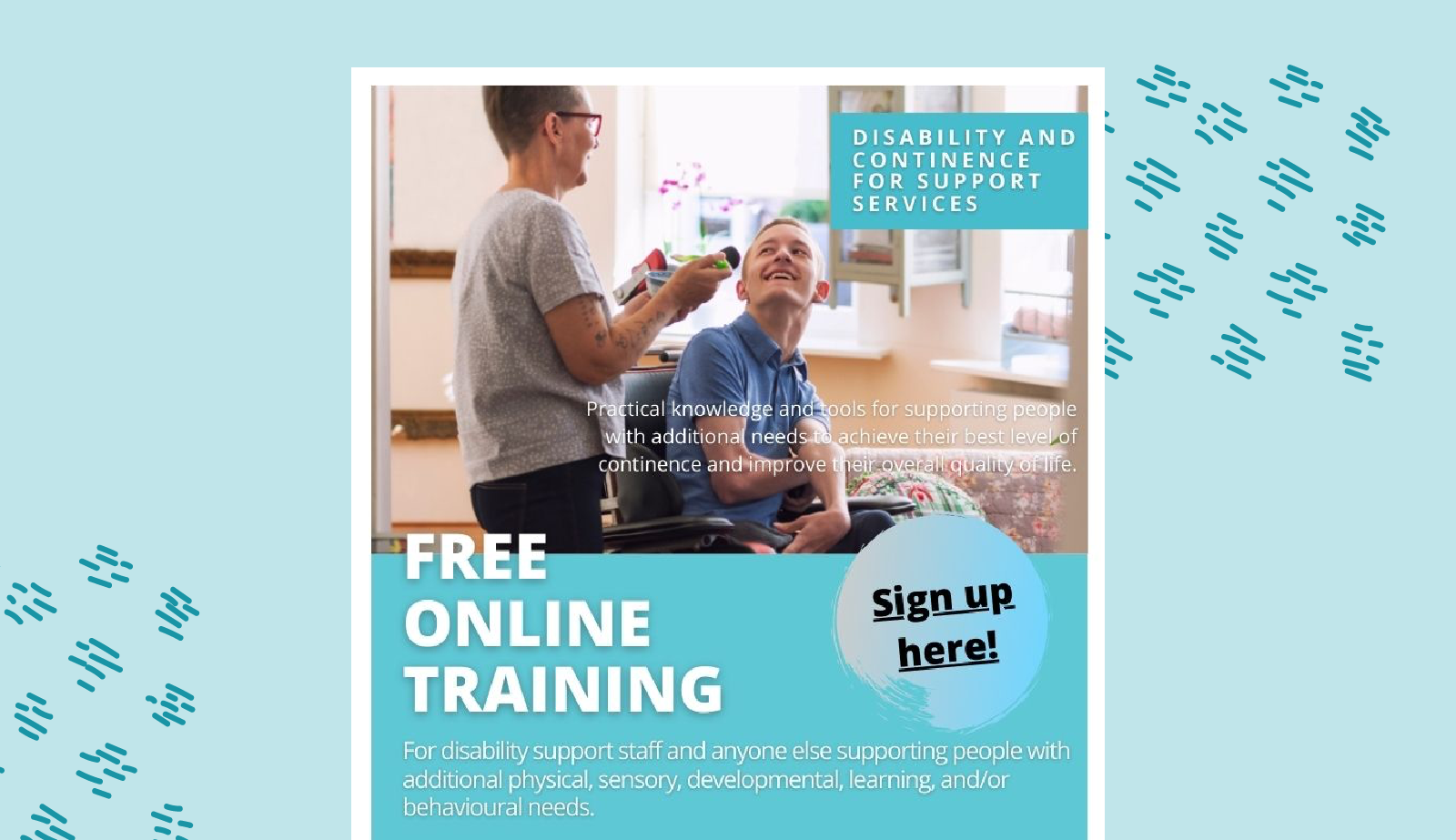
Disability and Continence for Disability Support Services

Developed with support from the IHC Foundation, this free online training module equips you with practical knowledge and tools for supporting people with disabilities to achieve their best level of continence and improve their quality of life. This training is aimed towards disability support services (e.g., residential staff, home support staff), but the content may be useful for anyone supporting people with physical, sensory, developmental, learning, and/or behavioural needs.
Online Training

Disability and Continence for Schools, Parents, and Caregivers

Developed with support from the IHC Foundation, this free online training module equips you with practical knowledge and tools for supporting students with disabilities to achieve their best level of continence and improve their quality of life. This training is aimed towards schools (e.g., teachers, teacher aides, learning support workers), but the content may be useful for anyone supporting people with physical, sensory, developmental, learning, and/or behavioural needs.

Videos

Poo Hoo

This video adaptation of the book Poo Hoo tells the story of Tim Thompson, a boy who is having problems with sore tummies and sneaky poos.

A Wee Secret

Jet Johnson has a secret ... find out how he bravely gets the help he needs in this video adaptation of the book A Wee Secret.

Let's Talk Constipation: What is Constipation?

A simple video guide explaining what constipation is.

Let's Talk Constipation: How to Beat Constipation

How can you get things moving? Get some helpful tips in this video guide.

Let's Talk Constipation: How Does it Happen?

How does constipation happen? Find out in this simple video guide.

Case Study: Soiling and Wetting

A case study, for parents and carers, based on a girl with developmental delay, struggling with ongoing issues with soiling and wetting.

Case Study: Constipation

Especially for parents and carers, this case study is based on a real story of how a boy with autism was able to overcome chronic constipation.

Free Downloads

Relevant Information and Resources

Webpage

Bladder and Bowel Health

The aim of these resources and information is to help you better understand your bladder and bowel – including what is "normal" or "healthy", how you can prevent issues from happening in the first place, and how to know when to seek help from a professional.
Guide

Continence Guide for Carers

Featuring videos from experienced pelvic health physiotherapists Liz Childs and Leanne Wait.
Order One Now!

Toilet Card

Finding a toilet when out and about can be a challenge for people with bladder or bowel problems. It could even discourage some people from going out altogether. Our Toilet Card clearly states that the holder has a medical condition and needs to use a toilet quickly. Most places you visit will be willing to help you.
Downloadable Resource

Care Pathways

Our continence care pathway documents guide you to recognise symptoms, learn self-management techniques, find out treatment options, and where to go for professional support in New Zealand. We have care pathways for women, men, children, older people, and disabled people.
Helpful Links

Toilet Maps & Changing Places (Fully Accessible Public Bathrooms)

If you or someone you support needs a handy or accessible bathroom while you’re out and about, here’s where you can find accessibility maps, public toilet locators, fully accessible changing rooms, and more.
Continence NZ thanks these sponsors: